Tuesday, August 11, 2020

USCT Petersburg Trench Art


It is commonly said that soldier life consists of months of boredom punctuated with moments of terror. That saying goes for just about any conflict, but pertains particularly well to the Civil War’s Petersburg Campaign of 1864-65. After a grueling month and a half of almost constant combat between the Union’s Army of the Potomac and the Confederacy’s Army of Northern Virginia in the spring of 1864, during what is known as the Overland Campaign, the contending forces transitioned into a dig in, attack, and counterattack mode of combat around Petersburg and Richmond. The fighting started in June 1864 and lasted until April 2, 1865; almost ten months of wear and tear on the soldiers.

 Between active army movements, soldiers manned their earthen fortifications and sought ways to pass the time. Many soldiers wrote letters to loved ones back home and read return mail voraciously, while others volunteered for detached duty details to keep themselves occupied. Some men played camp games, and others created pieces of “trench art,” while waiting for their call to action.

A soldier who bided his time in creative contemplation was Isaac J. Hill of Company D, 29th Connecticut Infantry. The 29th Connecticut was one of the handful of African American regiments—like the famous 54th Massachusetts—who maintained their state designation after the Union military established the United States Colored Troops (USCT). The 29th Connecticut was initially part of the X Corps, and later part of the all-black XXV Corps, both in the Army of the James.

Isaac J. Hill, born a free man of color in Union County, Pennsylvania, enlisted on January 6, 1864, in Norwich, Connecticut. Hill’s service records indicate that he was 35 years old and 6 feet tall, and had been a minister before entering the service. Hill’s comrade in the 29th Connecticut, Sgt. Alexander Heritage Newton wrote about some of their regiment’s experiences at Petersburg.  “We were soon in front of Petersburg, Va., looking upon the doomed city. We were greeted by a shell from the rebels, or Grey Backs, as we sometimes called them. It fell near the colonel, who was sitting on his horse at the right of the brigade. We countermarched and fell back to the woods, where we remained until 5 o’clock, when orders were received from the general to fall back to the fort and protect the pontoon bridge.” Later Newton writes: “Once again we marched in front of the horrible pit, Petersburg. Some of the whites said, see they are taking these colored soldiers to the slaughter pen. Truly, they had said so, for I never saw such a scene the first night. Shot and shell were raining fast around us.”

Private Hill’s trench art creation is a match safe, used to hold his fire starting devices, at that time often called Lucifers. Hill’s match safe, carved out of beef bones, decorated with a brass Union uniform button and a small brass ring, is mounted on a painted wooden base. This small, and at first glance, seemingly insignificant artifact, actually provides us with yet another piece of evidence about the experience of African American soldiers at Petersburg.

Isaac J. Hill survived the war and mustered out of service on October 24, 1865, in Brownsville, Texas.


Monday, August 10, 2020

Paying a High Price: Casualties for the 36th USCI at the Battle of New Market Heights


During the fighting at the Battle of New Market Heights, as Corporal Miles James of Company B, 36th United States Colored Infantry (USCI) maneuvered through abatis defenses and approached the Confederate earthworks, he received a grievous wound to the left upper arm. Somehow, James was able to gather up enough physical strength and determined courage to stand his ground and continue to load and fire his rifle with only the use of his right arm, all while cheering his charging comrades. Corp. James endured a field amputation, and after recovering, he was able to receive special permission to remain with his regiment until he received a disability discharge on October 13, 1865—over a year after his wounding. Unfortunately, James died in 1871 due to complications from his New Market Heights wound.

The 36th USCI paid a high price at the Battle of New Market Heights. Combing through the soldiers’ service records for the regiment, and with help from the roster appendix to James K. Bryant II’s fine history of the regiment, I was able to gather a list of the men killed in action, fatally wounded, and those wounded who survived. I have included their rank, name, company, age at enlistment, place of birth, place of enlistment, and any additional information provided in their service records.

I have placed an asterisk by the names of those soldiers Bryant lists in his roster as wounded at New Market Heights but who I was unable to corroborate with the information in their compiled service records. Mr. Bryant may have had access to additional sources such as pension records that I did not.  

Killed in Action:

Pvt. Abraham Blango, Co. H, 34, Beaufort Co., NC; Portsmouth, VA

Pvt. John Bunyan, Co. C, 18, Plymouth, NC; Plymouth, NC

Pvt. Jonas Capps, Co F, 22, Princess Anne Co., VA; Norfolk, VA

Corp. Glasgow Carr, Co. D, 24, Greene Co., NC; New Bern, NC

Pvt. Miles Crickman, Co. G, 41, Norfolk Co., VA; Portsmouth, VA

Sgt. William Etheridge, Co. H, 24, Roanoke Island, NC; Roanoke Island, NC; “being struck by a shell”

Pvt. Simon Gaylord, Co. F, 23, Washington, NC; Washington, NC

Pvt. Samuel Gregory, Co. F, 22, Perquimans Co., NC; Norfolk, VA

Pvt. Charles Lauringhouse, Co. E, 29, Edgecombe, NC; Washington, NC

Pvt. Roderick McCoy, Co. F, 21, Westmoreland Co., Point Lookout, MD

Pvt. Claiborne Miller, Co. A, 21, Hertford Co., NC; New Bern, NC

Pvt. Edward M. Montague, Co. K, 21 Gloucester Co., VA; Yorktown, VA

Pvt. Quince Odin, Co. H, 21, Martin Co., NC; Plymouth, NC; “being hit by a minie ball”

Corp. Isaac Overton, Co. F, 22, Pasquotank, NC; Roanoke Island, NC

Pvt. William H. Parker, Co. C, 25, Norfolk, VA; Portsmouth, VA

Corp. Grey Peyton (aka Paton), Co. D, 27, Pitt Co., NC; New Bern, NC

Pvt. William Redding, Co. H, 18, Martin Co., NC; Plymouth, NC; “being hit by a minie ball”

Pvt. James Roberts, Co. K, 20, [King and] Queen Co. VA; Portsmouth, VA

Pvt. William Sharpless, Co. H, 20, Craven Co., NC; Plymouth, NC

Pvt. John Simmons, Co. D, 20, Princess Ann Co., VA; Portsmouth, VA; “gun shot wound”

Pvt. Spencer Whitehouse, Co. D, 19, Princess Ann Co., Va; Portsmouth, VA; “gun shot wound”

Pvt. John Young, Co. B, 19, Norfolk Co., VA; Portsmouth, VA

Fatally Wounded:

Pvt. Henry Bell, Co. I, 20, Northampton, VA; Hampton, VA; died 9-30-1864 from wounds

Pvt. Elijah Cherry, Co. G, 30, Bertie Co., NC; Plymouth, NC; died 10-27-1864 from wounds

Pvt. Richard Cherry, Co. C, 40, Edgecombe Co., NC; Washington, NC; died 10-10-1864 from wounds

Corp. Aaron Mitchell, Co. F, 29, Pasquotank Co., NC; Washington, NC; died 10-17-1864 from wounds

Pvt. Hamilton Pitman, Co. B, 27, Edgecombe Co., NC; Washington, NC; died 11-15-64 from wounds

Pvt. Frank Satchen, Co. H, 18, Beaufort, NC; Washington, NC; died 12-21-1864 from wounds

Corp. Cudjoe Woodhouse, Co. G, 29, Currituck Co., NC; Roanoke Island, NC; died 10-6-1864 from wounds

Wounded Survived – Adjutant

Adj. Richard F. Andrews, 27, Lynn, MA; Promoted to captain of Co. D 10-21-1864

Wounded Survived – Co. A

*Pvt. London Brockett, 38, Currituck Co., NC; Norfolk, VA

Pvt. Romulous Cooper, 25, Hertford Co., NC; Plymouth, NC

*Pvt. Charles Mullen, 20, Hertford Co., NC; New Bern, NC

Pvt. Julius (Jule) Taylor, 19, Bertie Co., NC; Plymouth, NC

Pvt. Alexander Wiggins, 42, Martin Co., NC; Plymouth, NC; disability discharge on 12-1-1865 for bone resection of left upper arm. “The arm is nearly useless.”

Wounded Survived – Co. B

Pvt. John W. Butt, 44, Norfolk Co., NC; Portsmouth, VA

*Pvt. Lucius Graves, 19, James City Co., VA; Norfolk, VA

Pvt. Miles Grimes, 24, Pitt Co., NC; Washington, NC

Pvt. George James, 18, Norfolk, VA; Portsmouth, VA

Corp. Miles James, 34, Princess Anne Co., VA; Norfolk, VA; amputation of left arm, disability discharge 10-13-1865; Medal of Honor and Butler Medal recipient

Pvt. James T. Johnson, 23, Suffolk Co., VA; Norfolk, VA

*Pvt. Peter Jones, 33, Halifax Co., NC; New Bern, NC

Pvt. William Taylor, 19, Caroline Co., VA; Norfolk, VA

Wounded Survived – Co. C

Pvt. Henry Clay, 20, Whitford, NC; Portsmouth, VA

Pvt. Willis Dempsey, 22, Elizabeth City, NC; Portsmouth, VA; disability discharge on 6—1865 from effects of gunshot wound to right elbow

Pvt. Peter Downing, 41, Lee’s Mills, NC; Plymouth, NC; disability discharge on 2-10-1865 due to amputation of right arm

*Pvt. Abner Farnshaw, 21, Princess Anne Co., VA; Portsmouth, VA

1st Lt. Edwin Gaskill, 20, joined 36th as 2nd Lt. on 5-17-1864

Corp. Rufus Mayo, 29, Plymouth, NC; Plymouth, NC

Pvt. Calvin McClenney, 32, Nansemond Co., VA; Washington, NC; “gunshot wound both thighs;” returned to duty 2-10-1865

Pvt. Edward Phelps, 19, Washington, NC; Plymouth, NC; disability discharge on 6-18-1865, “loss of use of right hand the result of a gun shot wound”

Pvt. Thomas Wilkinson, 18, Washington, NC; New Bern, NC; hospitalized in Philadelphia, deserted from hospital on 1-15-1865

Pvt. Alexander Wilson, 32, Plymouth, NC; Plymouth, NC

Wounded Survived – Co. D

Pvt. Amos Franks, 19, New Bern, NC; New Bern, NC; disability discharge on 6-17-1865 for “gunshot wound of right shoulder and shell wound of right leg”

Pvt. James Jenkins, 22, Nashville, NC; New Bern, NC

Pvt. Saunders Norfleet, 30, Bertie Co., NC; Norfolk, VA  

Pvt. Otis Oliver, 18, Norfolk, VA; Norfolk, VA

Pvt. William Parker, 22, Gates Co., NC; Norfolk, VA

Pvt. Isaac Pritchett, 22, Camden Co., NC; Portsmouth, VA

Pvt. Jacob Whitfield, 25, Whitehall, NC; Plymouth, NC

Pvt. Allen Wiggins, 20, New Bern, NC; New Bern, NC

Wounded Survived – Co. E

Pvt. Thomas Adams, 23, Essex Co., VA; Point Lookout, MD

Pvt. William Almstead, 18, Gloucester, VA; Norfolk, VA

*Pvt. Solomon Atwood, 18, Princess Anne Co., VA; Norfolk, VA

Pvt. Anthony Collins, 33, Norfolk, VA; Norfolk, VA; disability discharge on 6-1-1865 due to “amputation of left thigh the result of gunshot wound”

Pvt. Peter Cornick, 22, Princess Anne Co.; Norfolk, VA

Pvt. Solomon Edwards, 46, Isle of Wight, VA; Norfolk, VA

*Pvt. Byron Gowns, 22, Greeneville, NC; Washington, NC

Pvt. Madison Grimes, 19, Fount Hill, VA, Point Lookout, MD; disability discharge on 4-18-1865 for injury to “right wrist and of fingers of right hand form gunshot wound”

Pvt. Samuel Hall, 21, Duplin Co, NC; New Bern, NC

Pvt. Shadrick Land, 21, Princess Anne Co., VA; Portsmouth, VA

Pvt. Richard Robb, 21, Essex Co., VA; Point Lookout, MD

Pvt. William Simpson, 23, Baltimore, MD, Norfolk, VA; disability discharge on 10-25-1865 for “complete anchyloses of right elbow joint caused by gunshot wound”

Pvt. Rhone Smithedge, 20, Plymouth, NC; New Bern, NC

Pvt. Peter Thomas, 20, Portsmouth, VA; Norfolk, VA; disability discharge on 3-15-1865 for “wounded in the shoulder . . . and has been unfit for any duty as a soldier ever since”

*2nd Lt. Isaac Thurlow, 20, appointed 5-31-1864, previously served with 32nd Massachusetts

*Pvt. Turner White, 19, Pasquotank Co., NC; Norfolk, VA

Wounded Survived – Co. F

*Pvt. Albert Banks, 27, Southampton, VA; Plymouth, NC

Pvt. Samuel Gregory, 18, Perquimans Co., NC; Roanoke Island, NC; disability discharge on 5-17-1865 for “paralysis of left arm from injury to brachial nerve by a [gunshot] wound of neck”

Pvt. Owen Harris, 28, Princess Anne Co., VA; Norfolk, VA

Pvt. Riley Midget, 18, Currituck Co., NC; Roanoke Island, NC

Wounded Survived – Co. G

*Pvt. Henry Augustus, 18, Pasquotank Co., NC; Portsmouth, VA

1st Lt. Francis Bicknell, 20, Weymouth, MA; joined 36th on 6-24-1864, promoted to captain on 10-22-1864

*Pvt. Joseph Diggs, 24, James City Co. VA; Yorktown, VA

Corp. James Gallop, 32. Currituck Co., NC; Roanoke Island, NC

*Pvt. Thomas Hawkins, 21, Richmond Co., VA; Fort Monroe, VA

Pvt. John Horne, 20, Richmond Co., VA; Point Lookout, MD

1st Sgt. Anthony Pool, 20, Surry Co. VA; Yorktown, VA

Corp. Wilson Stogley, 20, Perquimans Co., NC; Portsmouth, VA

*Pvt. [Drummer] Henry F. Willis, 15, Norfolk, VA; Portsmouth, VA

Wounded Survived – Co. H

Corp. George Baysmore, 28, Bertie Co., NC; Plymouth, NC; disability discharge on 1-17-1866 for “gunshot wound of right forearm, injuring the ulna, and also of the right hip injuring the femur”

Pvt. John Brown, 21, New Bern, NC; New Bern; disability discharge on 5-4-1865 for “Disability caused by gun shot wound. ‘Minie” Ball entered inner side of middle portion of left thigh, passing through course of sciatic nerve posterior to femur and emerged on opposite and outer side of thigh. All muscles of leg . . . paralyzed.

Pvt. Edward Brumser, 22, Currituck Co., NC; Plymouth, NC

Pvt. James Edwards, 36, Pitt Co., NC; Plymouth, NC; disability discharge on 3-20-1865 for “gunshot wound of right shoulder fracturing head of humerus (which was resected) causing partial auclylesis of shoulder joint”

Corp. Shadrack Keys, 37, Martin Co., NC; Plymouth, NC

Pvt. Katon Perry, 26, Pasquotank Co., NC; Plymouth, NC

Pvt. Joseph Swan, 23, Martin Co., NC; Washington, NC; gunshot wound both thighs but returned to duty and mustered out the with regiment

Pvt. James Tankard, 19, Beaufort, NC; Washington, NC

Pvt. Joseph Walford, 37, Plymouth, NC; Plymouth, NC

Wounded Survived – Co. I

1st Lt. James B. Backup, 20, Roxbury, MA; appointed to position on 8-13-1863, formerly of 39th Massachusetts, disability discharge on 1-23-1865 for “gunshot wound through left chest . . . also partial paralysis of right leg”

*Pvt. Frank Land, 32, Norfolk, VA; Portsmouth, VA

Pvt. Edmund Price, 35, Gates Co., NC; Portsmouth, VA

*Pvt. Wilson Reed, 23, Currituck Co., NC; Portsmouth, VA

Pvt. William Smith, 29, Norfolk, VA; Portsmouth, VA

Pvt. Joseph Wright, 22, Petersburg, VA; Hampton, VA

Wounded Survived – Co. K

Pvt. Frank Cornick, 21, Princess Anne Co., VA; Portsmouth, VA; disability discharge on 3-27-1866 for “wounded in action in right arm” and “right arm amputation at shoulder joint.”

Corp. Samuel Crofts, 18, Petersburg, VA; Hampton, VA

*Pvt. Isaac Kellen, 26, Norfolk Co., VA; Portsmouth, VA

Sgt. Andrew Nelson, 18, King William Co., VA; Yorktown, VA

*Pvt. Jefferson Valentine, 19, Beaufort Co., NC; New Bern, NC

Twenty-two killed in action, seven fatally wounded, and eighty-one wounded. This list was not produced in attempt to sensationalize the pain these men suffered, but rather to acknowledge the sacrifices they were willing to endure to ensure the death of slavery, show themselves men and worthy of citizenship and thus the guarantees of the Constitution, and to maintain the Union of the states. It is also hoped that this enumeration helps descendants make connections with their ancestors. Courageously done 36th!

Saturday, August 1, 2020

Recent Acquisitions to My Library


The Petersburg Campaign section of my library seems to constantly grow. New studies have been coming out regularly over the last decade or so that give us new angles to think about and cover subjects previously under examined.  Adding to the expanding body of scholarship on Petersburg is Sean Michael Chick's The Battle of Petersburg, June 15-18, 1864, which was published in 2015. I borrowed this book to read about three years ago, and found it helpful in better understanding both army's movements during those initial four day of fighting, so I am happy to add a copy of it to my personal library.
 

At our book club at work we last read Civil War Places: Seeing the Conflict through the Eyes of Its Leading Historians. It was an excellent choice for discussion. We all enjoyed it so much that we decided to next read the similarly structured Lens of War: Exploring Iconic Photographs of the Civil War, which is also edited by J. Matthew Gallmand and Gary W. Gallagher. Instead of the field's top historians choosing a personally special place, as in the Civil War Places book, they choose a period photograph to write about in Lens of War. I can't wait to start turning the pages on this one.


The Hampton Roads area of Virginia has so much significant African American history. It is where not only the first Africans arrived in British North America in 1619, it also where the Civil War seeds of emancipation were sown with Gen. Benjamin Butler's refusal to return three refugee former enslaved men to their owner. "Freedom's Fortress," aka Fort Monroe, played an important part in the United States Colored Troop story, too. These historical topics and many others get well deserved attention in Cassandra Newby-Alexander's An African American History of the Civil War in Hampton Roads


A book that has been on my "wishlist" for quite a while is Richard M. Reid's Freedom for Themselves: North Carolina's Black Soldiers in the Civil War Era. However due to its high price, I've had to put it on hold, hoping I would come across a good used copy. But recently I learned that the University of North Carolina Press was offering a steep discount sale, so I snatched up a copy. Several of the African American regiments that fought at the Battle of New Market Heights had North Carolina origins, so it relevance to my research is clear. The book coves the experiences of the 35th, 36th, and 37th US Colored Infantry regiments, and the 14th Heavy Artillery. All came from the Old North State and ended up making a name for themselves during the conflict. 

\
I've always been interested in Civil War military intelligence and how it was conducted. Who doesn't like espionage and intrigue? With the recent publication of Major General George H. Sharpe and the Creation of American Military Intelligence in the Civil War by Peter G. Tsouras, we can now get a fuller understanding and appreciation of the Bureau of Military Information and the man who created and headed it. The information he provided to the Union helped turn the tide of the war in favor of the Federal forces and ultimately secure victory.

Happy reading! 

Friday, July 31, 2020

"A Bit of War History"

When I first saw "A Bit of War History," by Thomas Waterman Wood, I was struck by its honesty and  realism. Painted in 1866, it is a three-part painting depicting an African American man's transition from freedman refugee to soldier to veteran. 

Wood, born in Vermont in 1823, apparently received the inspiration to paint the series of images while living in Louisville, Kentucky, and seeing an African American man attempting to exercise a measure of independence and mobility on homemade crutches. 


The first image, titled "The Contraband," (above) shows the picture's subject in the wear of an formerly enslaved field hand. He doffs a tan slouch hat and has a sack coat with a bundle of dried tobacco leaves in coat's pocket. He seems to own only the clothes on his back and the small bundle and stick he holds in his left hand. He arrives at the provost marshal office where a broadside declares, "Volunteers Wanted." In the doorway to the office is a United States flag and a war drum. A corner of staked tent appears at the bottom left foreground. A Springfield rifle-musket and soldier's accouterments lean against the stucco wall next to a ladder-back chair on the right side of the painting. A smoking cigar is on the ground at his feet.


In the second view, "The Recruit," the man appears as a fully equipped United States Colored Troops soldier. On his belt is the distinctive "US," and a brass eagle rest on his chest as part of his cartridge box sling. He wears an infantryman's overcoat and military shoes. A forage cap sits at a jaunty angle on his head, which features a determined countenance. He carries his Springfield rifle on his right shoulder. The "Volunteers Wanted" broadside has seemingly faded from the first image, and a United States flag sketch has been added to the wall. The U.S. flag and drum remain in the office doorway and the ladder-back chair remains but instead of supporting the gear the soldier now carries, it contains a newspaper and a cigar. Wooden chips litter the ground as if the chairs' former occupant had been whittling. 


In the third and final view, "The Veteran," our soldier is depicted after his campaigning is over. The war has not been kind to him, taking his left leg at the knee. A couple of crutches help support him while standing to give a salute to show his continued commitment to the army. His sky blue great coat and trousers have faded through hard marching, camping, and fighting. Unable to manage his crutches his rifle and equipment, those tools of war again rest against the wall. The chair's top rung support has worn through since the last scene, and a double-bag knapsack rests on the ground before the chair. The flag still stands in the doorway, perhaps indicating the success of the cause, but now that the war is over, the drum is gone. The look of determination of "The Recruit" seems to have transitioned to satisfaction as "The Veteran." Perhaps he felt willing to give a leg to end slavery, stake a claim for citizenship and equality, and maintain the Union. 


Sunday, July 26, 2020

Dying Far From Home - Richard Varney, Co. K, 4th USCI


In my ongoing efforts to recognize the service and sacrifice of the soldiers who fought and died in the United States Colored Troops, I am continually finding so many men interred in my local national cemeteries. Depending on surviving and available primary source documents, sometimes significant backstories can be told about these men, unfortunately, other times, not so much. Regardless, it is still well worth the time and effort to bring at least a measure of acknowledgement to them for their willingness to lay their lives on the line for the ideals of the United States of America.

Pvt. Richard Varney was a mere 21 years old when he enlisted in Company K, 4th United States Colored Infantry on September 2, 1863, in Baltimore. Varney was born enslaved in Talbot County, Maryland. His occupation is listed in his service records as "farmer." One wonders what occupation Varney might have pursued had he not been enslaved. No information is provided on Varney's owner. Unlike many Maryland enslaved men who served in USCT regiments, no claim for compensation accompanies Varney's service records. Did he flee slavery to enlist?

As is the case with most soldiers, we are able to draw a rough mind's-eye picture of Varney from his enlistment description. He was of common height for soldiers, standing five feet, five inches. His noted complexion was "griff," a hue somewhere between black and mulatto. Varney's eyes were reported as "black" and his hair "curly."

Not all soldiers rose in rank during their Civil War military careers. In fact, the vast majority did not. Varney entered service as a private and closed out as a private. Not receiving a promotion does not mean that a man was any less of a soldier. The measure of soldier is found in whether he did his duty or not. Pvt. Varney did his duty.

During his enlistment, the only thing that took Varney away from his company and regiment was an undisclosed illness in late June of 1864. It was severe enough to require a hospital stay of undetermined duration. However, he returned to duty two months later, detailed to work on the Dutch Gap Canal. This massive earth removal project was an attempt to bypass some of the Confederate shore defenses along the twisting James River. It was very unpleasant work in dangerous conditions, with the workers often enduring Confederate artillery fire.

Dutch Gap Canal

On September 28, 1864, Pvt. Varney along with his officers and comrades from the 4th USCI left Jones Landing via gunboat transport and soon disembarked at Deep Bottom. The 4th made camp that evening and got a little sleep. According to Sgt. Maj. Christian Fleetwood, some men made coffee before forming up to make the assault on the Confederate earthwork lines along New Market Heights Road.

The 4th led the attack. Before stepping off, the soldiers received instructions to leave their knapsacks, to take only a blanket roll, haversack, and canteen in addition to their rifle musket and accouterments. In addition, the men were to load their rifles, but not cap them, and to affix their bayonets. Right behind and just offset to the left of the 4th, the 6th USCI followed.

It is unknown at what point in the assault, whether it was before reaching the Confederate abatis obstacles or among it, but Pvt. Varney received wounds to the head, right arm, and his right side. Unlike many of his comrades, Varney left the New Market Heights battlefield still clinging to life. Transported to the XVIII Corps base hospital at Point of Rocks, on the Appomattox River near City Point. Efforts to treat Pvt. Varney's wounds ultimately proved unsuccessful. He passed away on October 6.

Point of Rocks Hospital Complex
  
Originally buried at the Point of Rocks soldier's cemetery, Pvt. Varney was later moved to the City Point National Cemetery where today he rests in peace in grave number 4131. Pvt. Varney, you are remembered!

Period images courtesy Library of Congress.

Thursday, July 23, 2020

Capturing a Brigadier General at Fort Stedman


Today, Petersburg National Battlefield's Fort Stedman is the epitome of peacefulness. But on the early morning of March 25, 1865, it was anything but pacific. It was the roiling scene of two desperate armies; one wishing to put a serious dent into the other, the other determined to maintain its hard-earned position.

That early spring morning, Maj. Gen. John B. Gordon led his corps of Army of Northern Virginia soldiers on a sneak attack at a point where the Union and Confederate lines were within a good stone's-throw apart. The goal of the assault was to rupture the Union IX Corps line, threaten the U.S. Military Railroad line about a mile behind it. This hopefully would cause Lt. Gen. Ulysses S. Grant to contract his ever leftward-expanding line in order to protect the vital Union supply base at City Point.

Initially, all went well for the Southerners. Gordon's men were able to fool the Union pickets by claiming they were deserters keen on turning in themselves and their muskets. The federal sentries were largely fooled and thus not able to give a warning shot to their comrades back along the main line. Led by accompanying pioneers, who cut through the "no man's land" obstacles, the Confederate tidal wave crashed into and over Fort Stedman, and the supporting adjacent earthen emplacements. 

Pvt. Gordon Bradwell of the 31st Georgia Infantry was not obligated to participate in the massive charge that March 25 morning. He had just spent time on picket duty.  Bradwell initially watched and cheered from the Confederate earthworks sidelines. However, when a bullet knocked his hat off, and as he felt, "my right ear with it," he decided he would join in, as he would rather die among his comrades than behind the fighting.

At about the time Bradwell made it to the Union picket's rifle pits, he encountered Gen. Gordon speaking with a Union officer. As he attempted to continue on, Bradwell was stopped by Gordon and introduced the Brigadier General Napoleon B. McLaughlin, who commanded a brigade in the IX Corps. Captured early in the fight by Bradwell's comrade, Lt. William Gwyn of the 31st Georgia, McLaughlin was shuttled toward the rear. Bradwell was instructed by Gordon to guard McLaughlin and take the officer to Petersburg until the battle was over, as Gordon wished to speak to McLaughlin further. Bradwell was ordered to treat the captured general with respect.

Brig. Gen. Napoleon McLaughlin, staff, and camp servant.

On the way to the rear McLaughlin asked to stop and watch the battle in progress from what the felt was a safe position. Bradwell thought the general could be killed if they stayed there, but relented and both men watched as the belligerents contended for the position. McLaughin told Bradwell that he was sure that it was only a matter of time before the Union defenders succeeded in reclaiming their lost ground. Continuing on, the unlikely pair of guard and captive encountered one of McLaughlin's officers, who was also a prisoner and McLaughlin related his capture story. Bradwell told McLaughlin's story as follows: "As our boys mounted those formidable works, which were made almost impregnable, and jumped down into the fort among the bayonets, in the darkness and confusion of the fighting the general met Lieutenant Gwyn, of our sharpshooters, who ordered him  to surrender. This the general at first refused to do and asked him if he was an officer. To this Gwyn replied, 'It does not matter, sir, whether I am or not, surrender or I will blow out your brains.' And surrender he did." That is where Bradwell left the story, before picking up with his account of evacuating Petersburg a week later on April 2.

Interestingly, Gen. McLaughlin left an account, too, albeit with less narrative than Bradwell's. It is located in the Official Records, and was written from the parole camp at Annapolis, Maryland, two days after the evacuation of Petersburg and Richmond.

After awaking to the first sounds of the battle, McLaughlin rushed with his staff to the scene of action. Passing along the line, McLaughlin checked on his units. Learning that the mortar battery at Battery 11 were now in enemy hands, McLaughlin sent orders for the 59th Massachusetts, then in reserve, to hit the works with fixed bayonets. Those effort proved successful with the recapture of that part of the line.

McLaughlin moved on to Fort Stedman to see how he could help. He related his experience as follows: "I crossed the parapet into Fort Stedman on the right, and meeting some men coming over the curtains, whom in the darkness I supposed to be part of the picket, I established them inside the work, giving direction with regard to position and firing, all of which were instantly obeyed. In a few minutes I saw a man crossing the parapet, whose uniform in the dawning light I recognized to be the enemy's, and I halted him asking him his regiment." This must have been Lt. Gwyn of the 31st Georgia. McLaughin continued that, "This called attention to myself, and the next moment I was surrounded by rebels, whom I supposed to be my men, and was sent to the rear, where I found General Gordon, to whom I delivered my sword, and was sent by him [via Bradwell] to Petersburg."

McLaughlin also included that while he was conversing with Gordon in no-man's-land, four Confederate brigades continued the charge, with each commander reporting to Gordon. In addition, two federal staff officers, one of whom (Lt. Sturgis) was from McLaughlin's staff, passed as prisoners going to the Confederate rear.

Like so many other prisoners during the Petersburg Campaign, McLaughin made his way to Richmond by rail. He soon arrived at Libby prison where he remained until April 2. Apparently, with all the confusion during the evacuation, McLaughin and the other Union officers held at Libby received paroles and came to Annapolis by way of Fort Monroe.

In his report, McLaughlin provided a tally for his brigade's Fort Stedman prisoners. "There were 16 officers of my brigade captured besides myself, and about 480 enlisted men, all of whom were paroled." The general did not blame his command for their misfortune. "Rather all were vigilant and and on the alert, officers and men, and all was done that lay within the bounds of possibility," McLaughin reported. He believed it was the Confederates' ability to silently capture the Union pickets under the ruse of being deserters that led to their initial success, and his and his men's capture. The additional fact that two Confederate divisions (with a third in reserve) made the attack and overwhelmed his brigade also contributed.

Fortunately for McLaughlin and his men, their parole ensured a relatively easy prison experience. That, combined with their capture very late in the campaign, meant that they would not endure a lengthy stay at a hell hole like Andersonville, Salisbury, Florence, or Point Lookout, Fort Delaware, or Elmira, as so many other soldiers did earlier in the campaign for the Cockade City. 

Images courtesy of the Library of Congress

Sources:
Under the Southern Cross: Soldier Life with Gordon Bradwell and the Army of Northern Virginia, edited by Pharris Deloach Johnson, Mercer University Press, 1999.

O.R., Series 1, Vol. 46, Part 1, pgs. 331-332.

Monday, July 20, 2020

The Fighting Bantums of the 4th USCI


I have made a conscious effort to read just about everything that I can get my hands on that covers the Battle of New Market Heights and the men who fought there. Books, magazine articles, and primary documents are all excellent sources of information. Reading such materials can sometimes also help open new areas of inquiry, investigation, and discovery.

Recently, I purchased a little book titled, Combat: Union Infantryman Versus Confederate Infantryman, Eastern Theater, 1861-1865, and published by Osprey Publishing in 2013. This slim volume focuses primarily on three battles: First Manassas, Gettysburg, and Chaffin's Farm/New Market Heights. In the chapter on New Market Heights the author mentions two brothers killed in the fighting, Joseph and Robert Bantum from Companies G and H, respectively of the 4th United States Colored Infantry. Unfortunately, the author does not provide a citation for where he found this information, although he does use citations for other accounts about the battle.

Curious to see what I could find out about these supposed brothers, I went to Fold3.com to dig a little deeper. Well, the first thing I noticed was that there were eight Bantams listed for the 4th USCI. Interesting! So, I made a little chart to keep track of what I found. Luckily, only two of them had the same first name. In my chart I also wrote down their pre-war free or slave status, heights, ages, enlistment dates and places, home county and state, complexions, and, of course, their fates.

What I found when I analyzed this collected information gives me a good deal of confidence in saying that more than two of these men were likely related. They may have been cousins, but there are enough common variables to make even the most skeptical person say, hmmmmmmm. By the by, their last names are spelled in various ways throughout their service and census records; Bantum, Bantam, Bantom, etc. I will go with Bantum to maintain a consistency, and because it appears to be used most often.

Let's start with an alphabetical list of the men:
Edward Bantum, Co. G, 22 years old, 5-6 tall, enlisted 8/11/63 in Baltimore, free man, dark brown, Talbot Co., MD

Franklin Bantum, Co, K, 20 years old, 5-7 tall, enlisted 9/2/63 in Baltimore, free man, black, Eastern Shore, MD

John Bantum, Co. F, 21 years old, 5-4.5 tall, enlisted 8/4/63 in Baltimore, enslaved, brown, Talbot Co., MD

John Bantum, Co. H, 24 years old, 5-7.5 tall, enlisted 8/11/63 in Baltimore, free man, mulatto, Talbot Co., MD

Joseph H. Bantum, Co. G, 18 years old, 5-6.5 tall, enlisted 8/11/1863 in Baltimore, free man, brown, Talbot Co., MD

Perry Bantum, Co, K, 42 years old, 5-8.5 tall, enlisted 9/2/63 in Baltimore, free man, black, Talbot Co., MD

Richard Bantum, Co. K, 39 years old, enlisted 9/2/63 in Baltimore, free man, black, Talbot Co., MD

Robert Bantum, Co. H, 26 years old, enlisted 8/11/63 in Baltimore, free man, brown, Talbot Co., MD

The first thing that stuck me, other than two outliers (Perry-42, and Richard-39), were the similarities in ages. All the other men were between 18-25, a common age range for Civil War soldiers, whether they be white or black.

The second thing that stood out to me were their enlistment dates. Although it is certainly not a definite, it stands to reason that relatives, whether they be brothers or cousins, might want to enlist together. The two older Bantams, Perry and Richard, along with Franklin, all enlisted on September 2, 1863, and interestingly, the same company.

However it is the four men who enlisted on August 11, 1863, who really caught my attention. Edward (22), John (24), Joseph (18), and Robert (26) all signed up on the same day, and their ages are spaced almost perfectly to be brothers. Looking at other similarities between these four men, one finds their heights quite similar, 5-6, 5-7.5, 5-6.5, 5-8.5, and their complexions (dark brown, brown, brown, and with John, a mulatto, being different), too; although complexion is a very subjective variable. Another common denominator is that the four were assigned to the same two companies (Edward and Joseph - Co. G, and John and Robert - Co. H). Companies G and H are obviously next to each other alphabetically, and could have been filled as such.

I thought I could simply confirm these four men's relationship by looking up the 1860 census and seeing if they were together in the same household. Alas, I found the four, but they were all living in different homes. Some of them were living with white households working as "farm laborers." The youngest, Joseph, appears to still be at home with his mother Ellen (40). Apparently, the older one had already left home and gone to work for other people, although they still lived in the same Trappe District, Talbot County, Maryland area. My next thought was to go back to the 1850 census and see if the family was still intact a decade earlier, but unfortunately, my search was inconclusive.

Moving back to these four men's service records, I found that regardless of whether they were brothers, cousins, or mixture of brothers and cousins, they certainly left a legacy of sacrifice to the United States, the cause of freedom, and citizenship. Of these four men, only one would survive the war. All four were either killed, wounded, or mortally wounded in combat actions. I'll provide a little information about what I discovered for each man.

Pvt. Edward Bantum, apparently a sailor before enlisting, was wounded in action during the initial attacks on Petersburg on June 15, 1864. A gunshot wound to the right hand cost him his fore and middle fingers and was severe enough to warrant a discharge, as he left the service on November 28, 1864, after a recovery at Grant General Hospital at Willets Point, New York City. Edward holds my only hope of ever finding out if these four men were indeed brothers. Perhaps he received a pension for his disability, and if I am so fortunate, perhaps he mentions enlisting with them in his application. I will have to see if a pension exists, and then get to the National Archives to read it. Edward died on July 14, 1914. Today, he rests in peace at the Hampton National Cemetery.


Pvt. John Bantum is listed as a "laborer" before his enlistment. Always present for duty, John was court martialed on June 12, 1864, for what probably seems to modern readers an insignificant dereliction of duty, but at the time was considered quite serious. It happened on May 17, 1864, at the 4th USCI encampment near Broadway Landing (between Petersburg and City Point on the Appomattox River). It appears that John was posted as a picket with the instructions to not let anyone pass in or out of the lines, "neither officers nor men, Citizens nor soldiers." However, he allowed the 4th USCTIs Major Augustus S. Boernstein and two other officers through the picket line without stopping them. John was found guilty and fined $5.00, deducted from this pay.

During the fighting at the Battle of New Market Heights, John was wounded in the left leg. Apparently evacuated from the battlefield, he received treatment, which included amputation at the thigh. John ended up at the General Hospital at Fort Monroe, where he died on October 4, 1864, from the effects of his wound. I was unable to locate the grave for Pvt. John Bantum.


Pvt. Joseph H. Bantum was a "farmer" before his enlistment. Joseph's records state that he deserted from Camp Yorktown on April 3, 1864. However, he was "arrested" about three weeks later. It appears that he spent about four months in "confinement," as he returned to duty on August 11, 1864. The next muster card, that of September and October 1864 reads: "Killed in action, September 29, 1864 at New Market Heights, Va." No effects were listed on his death inventory. I was unable to find where Pvt. Joseph H. Bantum is buried.


Pvt. Robert A. Bantum, the oldest of the four that I suspect were brothers, or at least cousins, was also a farmer before enlisting. Robert appears to have been the model soldier; always present. He did receive hospitalization for an undisclosed illness sometime between May and June 1864, but was back present in July and August. He, too, was at New Market Heights, and that battle would also take his life. "Killed in action" is such a tragic thing to read while researching soldiers. One always wonders what future potential was snuffed out by the fate of war.


The other Bantums in the 4th USCI all survived the conflict, but they likely suffered ill health effects long after leaving the service. 42-year old Perry Bantum was discharged on June 26, 1865, in Goldsboro, North Carolina for disability. His records show he was sick and hospitalized often. He also suffered from rheumatism. Franklin Bantum was wounded in the right hand, which required an operation, and that he received in action at Fort Fisher, North Carolina on February 11, 1865. He was discharged from service on June 26, 1865, due to his disability. The formerly enslaved John Bantum mustered out with the 4th USCI on May 4, 1866. At the end of his army career he received a promotion to corporal. In his records are papers from his former owner, Thomas Leonard, claiming loyalty to the United States, staking title to John, and seeking compensation for his enlistment and thus freedom. Leonard received $300.00. John apparently died in Wilmington, Delaware, on March 28, 1928. He rests in peace there at the Mount Olive Cemetery. 39-year old Richard Bantum seems to have had a relatively incident free service. He was hospitialzed at one point, but otherwise was always present for duty until he mustered out on May 4, 1866.

With all of these men coming from the same county there is certainly some family relationship between at least some of them. As stated above, I believe that at least four of the men were very close kin. Further research will hopefully confirm that that suspicion. Regardless of their true family connections, it goes without saying that the Bantums from Talbot County, Maryland deserve special recognition for their service to the United States. I am truly happy do my little part to share their amazing record of service and sacrifice.

Saturday, July 18, 2020

Pvt. George Thomas Prosser, 54th Massachusetts, Prisoner at Battery Wagner


Today marks the 157th anniversary of the attack on Battery Wagner by the famous 54th Massachusetts Infantry. That action, depicted at the end of the motion picture Glory, brought much needed army and public attention to the important combat role that United States Colored Troops could play in the Civil War. In honor of the men who fought so courageously at Battery Wagner, I thought I would share a post that has an association to that engagement, and which I had not fully explored until this week.

When I worked for the Kentucky Historical Society, I had the pleasure of assisting with a Teaching American History Grant known as "Democratic Visions: From Civil War to Civil Rights." During the grant we were able to share with the participating teachers the power of place when teaching history.

One of the many historic sites that we visited was African American Cemetery #2 in Lexington. This burial ground served as the resting place for many of the community's notable black men and women from the late nineteenth and early twentieth centuries, when cemeteries were segregated. Those buried there included a number of USCT soldiers. As one might expect, the vast majority served in regiments raised in the Bluegrass State. Kentucky was second only to Louisiana in the number of men who served in African American regiments during the Civil War. That is pretty impressive when one considers that Kentucky, a loyal slave holding state, was allowed to delay USCT enlistments until the spring of 1864.

However, while we walked around the cemetery, a particular headstone caught my attention, so I snapped a picture. The inscription reads:

G. T. PROSSER 
Co. D
54 MASS. INF.

I knew that several men who ultimately served in both the 54th and 55th Massachusetts regiments were noted as being born in Kentucky on their enlistment forms, so I assumed that was the case here. My line of thinking went something like this: A young man ran away from enslavement, made his way to a free states community, and when the opportunity came around, he enlisted to fight to end slavery, claim citizenship, and preserve the Union. However, I wanted to know for sure. I promised myself to find out the story of Mr. Prosser when I got the chance. Well, I forgot I had taken that photograph and it got buried behind hundreds of images on my digital camera. Since then, I've gone primarily to using my phone for photographs and the digital camera got put away. Long story short, I came across the headstone image recently and decided to look up his story now that I have ready access to soldiers' compiled service records and census records.

The story was much different than I expected. The first record I found on George Thomas Prosser was his compiled service records on Fold3.com. It tells that he was born in Columbia, Pennsylvania. Strike number one on my assumption. Being that he was a free man of color, I switched for a minute to Ancestry.com to look up census information. He was 21 years old when he enlisted in 1863, so he would hopefully appear in both the 1850 and 1860 census reports. 

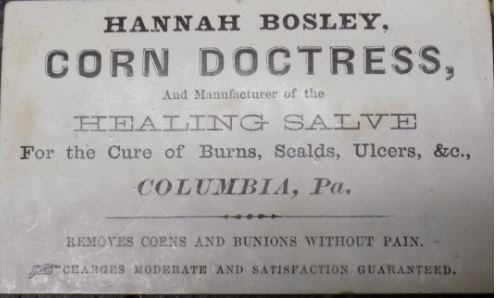
I did not find Prosser in the 1850 census, but I did in the 1860 listings. He is shown as an 18 year old black male in the household of Hannah Bosley (48, mulatto, doctress), who is Prosser's mother. She was born in Maryland. Also listed in household is Harriet Prosser (17), Mary Prosser (13), Isaac Prosser (13), and Sarah Prosser (7). All of the children were born in Pennsylvania. 


Moving back to Prosser's service records, they give a cursory physical description: 21 years old, brown complexion, 6 feet tall. His occupation before enlisting in Company D was "laborer." Prosser enlisted on March 19, 1863 in Readville, Massachusetts for three years.

Only about four months in service, Pvt. Prosser's July-August 1863 card indicates he was absent. Further information at the bottom explains his absence. It reads "missing in action since July 18, 1863." That, of course, was the 54th's fight at Battery Wagner. The subsequent cards all state that he was absent, until the September-October card, which says Prosser was a "Prisoner of War in Charleston, S.C." From the records it appears that Pvt. Prosser was paroled and exchanged on March 4, 1865, and rejoined the 54th on June 7, 1865.

In Prosser's collection of records there is a letter dated December 3, 1863, from the Supervisory Committee Recruiting Colored Regiments in Philadelphia to Colonel Edward Hallowell, who followed Robert Gould Shaw as commander of the 54th after Gould's death at Battery Wagner. In the letter it mentions that Prosser's mother called at the Philadelphia office seeking information about her son. The writer said that it was reported that Prosser was killed on July 29 and he wished for information so that he could write her. No response letter from Hallowell is included. Perhaps Hallowell did not have any information at that point to share.

Pvt. Prosser's service records are silent as to the details about his time as a prisoner. First of all he was fortunate to be captured and not executed or sold into slavery, which were both not uncommon practices by Confederate captors. Perhaps he was able to convince the rebel authorities that he was a free man of color before the war. 

A small clue to Prosser's release is given in Douglass R. Egerton's excellent 2016 book Thunder at the Gates: The Black Regiments that Redeemed America. Edgerton explains that the 21st USCT entered a fallen Charleston on February 18, 1865. The 55th Massachusetts entered the "Cradle of Secession" two days later. The 54th Massachusetts arrived On February 27. A company of the African American soldiers (Edgerton is not clear from which regiment) went to the city's Workhouse and found four members of the 54th Massachusetts, one of whom was Pvt. Prosser, nineteen months after his capture. Egerton writes "Much to everyone's surprise, the four were in reasonably good health and able to join their companies." It seems strange that Prosser would be noted as paroled and exchanged in his service records if he was indeed rescued from confinement by his comrades. 

A lucky internet search find turned up a fascinating 1900 record (see below) from one of Prosser's comrades, lifelong friend and fellow native of Columbia, Sylvester Burrell, that gave some additional information on Prosser's POW treatment. It says that when Prosser returned to the unit he was missing his two upper front teeth "which he told me had been kicked out by a Rebel." Burrell also mentioned that Prosser told him "that he contracted the scurvy while a prisoner of war." 


Regardless, Pvt. Prosser survived his incarceration and mustered out with the 54th on August 20, 1865, in Charleston.

George Thomas Prosser returned to Columbia, Pennsylvania after his service. The 1870 census shows him as a "day laborer" and living with his mother. He married, divorced, and then remarried. Prosser would become an African Methodist Episcopal minister. He eventually moved to Lexington, Kentucky to serve a church there and died of pneumonia at age 62 on July 3, 1904, and was buried in the African American Cemetery #2. A memorial marker is also in Zion Hill Cemetery in Prosser's hometown of Columbia, Pennsylvania. 

Well, I feel that I know Mr. G. T. Prosser better now. Discovering the story of his military service and the sacrifice of his health as a prisoner of war makes me wish I had tried harder to learn his story much earlier.      

Monday, July 13, 2020

Confederate Pvt. David Holt's Capture Experience at Globe Tavern


Last week I shared the story of 1st Sgt. James Johnson Kirkpatrick of the 16th Mississippi Infantry, who was captured during the Battle of Globe Tavern (aka Weldon Railroad) and held briefly in the Union "Bull Ring" at City Point. The 16th Mississippi was almost captured in whole during the fighting on August 21, 1864. Pvt. David Holt, another member of the regiment also left an account of his capture. However, unlike Kirkpatirck, who left a contemporary record, Holt penned his many years after the war while writing his memoirs. They were published in 1995 as A Mississippi Rebel in the Army of Northern Virginia: The Civil War Memoirs of Private David Holt. Despite the passage of years, Holt's account of event seem to ring true and are corroborated with other source material.

Holt claims that on the morning of August 21, 1864, Company K only mustered 21 soldiers. The 16th marched to the front from their camp without a breakfast and in the rear of their brigade. Supported by artillery, the brigade formed into a battleline and gathered momentum for their assault on the Union earthworks now protecting the severed railroad.

Painting a picture of the charge Holt wrote, "We fired and loaded as we ran. A man appeared on my left, running at a slight angle to me. With his red hair I thought he was Bob Gerald." It was not Bob Gerald, as Bob, like Holt would become a prisoner that day too. Holt continued, "As we touched shoulders, a missile of some sort struck his head on the side next to me and knocked his brains into my face. He plunged forward, and I ran on without looking back, wiping his blood off with my sleeve."

The Confederates stopped short of the Union earthworks by about 100 feet and piled into a farm ditch. Here, "Sam Wall, who was next to me, fell, shot through the groin, just as we reached it. We pulled him into the drain, where he lay displaying great fortitude. Colonel [Edward] Counsel [Councell] received a mortal wound, and we pulled him into the drain also," Holt remembered.

In this position the Mississippians fired at any Union soldiers who dared to show their heads above their earthworks. Holt though, explained, "Our ammunition was beginning to give out. After a man had fired his last shot, he would curl up under the bank and lay low." The wounded Col. Councell asked the men if reserves were coming up. They were not. He advised to "Raise the white flag."

Holt said that "One of the men possessed a pair of drawers that had a faint semblance to white. Placing them on the muzzle of his gun, he raised it up. Instantly all firing ceased, and the Yanks came pouring over the breastworks. I pulled off my accouterments and laid them down with my gun in the mud and trampled all [of them] out of sight, just as the Yankees reached us."

A Union soldier asked Holt where his gun was and Holt fibbed and said he did not have one, that he borrowed one from a comrade. The Yank then invited Holt to have breakfast with him behind the safety of the Union earthworks. At that time a kerfuffle broke out when Company K's 2nd Lt. James Bryan refused to surrender his sword to a private. A Union captain arrived and broke the tension and accepted the sword, and sword belt, which Bryan initially refused to give up but finally did by defiantly throwing it balled up into the captain's face. Fortunately, another Union officer stepped in and prevented Bryan's on the spot execution.

Holt and his newfound Union friend had their breakfast of salt pork, hardtack, and coffee. While eating the Confederate artillery opened up on the Union earthwork line causing friendly fire casualties among the prisoners. Holt looked over the pile of dirt and saw another wave of Confederate attackers coming, so he jumped up on the parapet and cheered them for a few seconds until he was urged back down by his Union captor. "On, on, on came the Confederates over a clear pasture beside the cornfield, but as they came, their line seemed to melt away. Every cannon and every rifle in that rainbow of fire [poured] as stream of death into their ranks. Soon a few remained standing, and my Yank ceased firing," Holt remembered.

Soon, Maj. Gen. Gouverneour K. Warren, commander of the defending V Corps, rode up and exclaimed "Move those prisoners quickly to the right from under the fire of their own guns." The prisoners moved off further behind Union lines and laid down on the ground in front of a unit held in reserve. While waiting to move again, Holt got into an argument with a Union soldier who offended him when commenting on his youthful appearance. The soldier, apparently trying to make amends offered Holt $5.00, which was refused. This brief altercation was broken up when a Union officer hailed, "Form the prisoners into line, and group men of the same company together." When completed, Holt and his comrades "moved on toward City Point between a double line of guard."

Wednesday, July 8, 2020

What was the "Bull Ring" at City Point?


While conducing my research into the experiences of Union and Confederate prisoners of war who were captured during the Petersburg Campaign, I've come across several mentions of the "Bull Ring" or "Bull Pen" located at City Point. What was this Bull Ring?

Officially the Bull Ring was the Union provost marshal's jail. Originally intended to hold recalcitrant federal soldiers who included bounty jumpers, deserters, drunkards, thieves, mutineers, and other degenerates. Located along what is today Hopewell's Cedar Lane, the Bull Ring consisted of three single-story wood barrack buildings, which were enclosed with a tall wooden wall and armed guards. 

However, when large numbers of Confederate prisoners were taken during various combat actions during the Petersburg Campaign, which was quite often, the Bull Ring also held enemy prisoners. 

After being captured at the Battle of Weldon Railroad (Globe Tavern) on August 21, 1864, James Johnson Kirkpatrick, a 1st sergeant in the 16th Mississippi Infantry mentioned the infamous Bull Ring in his diary. Captured with about 75 of his comrades after an attempt by their brigade to penetrate and recapture the V Corps earthworks, which cut the Weldon Railroad, Sgt. Kirkpatrick and his fellow prisoners were "escorted to the rear under fire of our [Confederate] artillery, counted and started for Bermuda Hundred under a squadron of cavalry." After their names were taken they drew rations of coffee, sugar, and hardtack. 

On the following day, August 22, and from behind the Union lines, instead of marching the few miles to City Point, the prisoners were placed on the United States Military Railroad. Arriving at City Point, Kirkpatrick wrote, "Our names were again taken here, and we were put in a place styled the Bull Pen. Feel very uncomfortable. Clothing all dirty and none to change. We left everything behind previous to making the ill-fated charge. Day warm. Received bad treatment. The soldiers at the front treated us well. Only a few were permitted to go after water at a time, consequently, the many had to endure thirst. No protection from the sun. Our crowd is mixed with consisting of Rebel prisoners, Yankee deserters, criminals, and Negroes. Rain this evening after dark. Took it as it came. Slept on the ground."

  
On August 23, the Confederate officers were put enroute to Johnson's Island, Ohio, while Kirkpatrick and other other non-commissioned officers and enlisted men were shipped via the Utica to the Point Lookout, Maryland POW camp.

E.B. Wise of the U.S. Sanitary Commission visited City Point and wrote an article for the January 11, 1865 issue of The Soldier's Journal. He located the Bull Ring "about two hundred yards South from the Hospital." He described it as thus: "This is a large building divided into three apartments, - the two end one being known as Bull Ring number one and two, while the middle apartment is more mildly, as well as justly appellated, Convalescent Barracks, where convalescents are detained to await transportation, &c., to convey them to their proper destination."

Wise estimated that "the whole building is calculated to accommodate about two thousand men, - the two Bull Rings five hundred each, leaving the remaining one thousand for the Convalescent Barracks. - Each bunk is made to accommodate three men. They are now in both Rings about four hundred and fifty prisoners." The majority of these men were likely Union prisoners due to it being winter and active campaigning at a standstill. "The greater number of these men are confined for very trivial offenses, and many of them are no doubt perfectly innocent judging from those who have already been discharged," Wise related.

Wise went on to call the Bull Ring a "Hell on earth." He wrote that "Great destitution prevails among the prisoners. Many have scarcely enough clothing to hide their nakedness, while the vermin is actually knawing into the flesh of some. I was told yesterday by a nurse in the hospital who was obliged to cut the hair off the head of a man from the prison, that his head was actually eaten into. This statement may seem untrue, but one only has to visit the place to be convinced of its veracity."
According to Wise the army did not provide the prisoners with clothing, however the Sanitary Commission was providing underwear to the most destitute.

As the Peterburg Campaign neared completion, thousands of prisoners made their way through the Bull Ring at City Point. Confederate prisoners from Fort Stedman, Five Forks, and the Breakthrough experienced brief stays at the Bull Ring, much like Sgt. Kirkpatrick had months before, then moved on to Northern POW camps before pledging the oath of allegiance and receiving releases in June and July 1865.