Monday, July 12, 2021

Dying Far From Home – Pvt. Thomas Young, Co. A, 5th USCI


African Americans in mid-nineteenth century America experienced the road to freedom differently. Some found the course short and straight. They claimed personal liberty as a right of birth by place or circumstance. However, being a free person of color—regardless of residence in a free state or slave state—still often did not entitle them to the same rights afforded to white citizens. Others had a longer, steeper path, filled with hurdles and detours. Yet, in spite of the many obstacles placed in their way, many individuals made their way to freedom and went on to fight for liberty and equality for others.

Documents that help tell Pvt. Thomas Young’s biography are sparse. Gathering bits and pieces of information here and there we can only gain a small picture of his life before enlisting in the United States Colored Troops. Born in South Carolina around 1836—likely enslaved—Young somehow someway relocated to Ross County, Ohio, where he lived before enlisting. A draft registration from 1863 lists Young’s occupation as a farmer.

Young apparently married Margaret Hawkins in May 1863. Although Young does not appear in the 1860 census for Ross County, Hawkins does. At that time the future Mrs. Young lived in the household of Mary Jackson, perhaps her mother. Margaret, 14-years old at that time, attended school and was born in Ohio. Ms. Jackson was born in North Carolina. In their small family was six-year old Louis Jackson, also born in Ohio.

Enlisting on June 17, 1863, in Company A, 127th Ohio Infantry, which soon received designation as the 5th United States Colored Infantry (USCI), Young mustered in with his comrades at Camp Delaware on August 7. At enlistment, Young stated his age as 27, and blacksmith as his occupation. He was a half inch over 6 feet tall, and the enlisting officer described his complexion as “black.” At several places in Young’s service records the note “free on or before April 19, 1861” appears, which indicates that he was entitled to equal wages and allowances when Congress finally passed a bill in June 1864, equalizing pay between white and black soldiers that retroacted to January 1, 1864.

Pvt. Young likely went through the same process that hundreds of thousands of other Civil War soldiers endured as they transitioned from civilian to military life. At Camp Delaware, Young drilled, learned army protocol, and formed close bonds with his mess mates, and other comrades in his company and regiment. He probably complained about the lack of variety in his rations, the long hours of drill, the high prices of the sutlers, and those officers he found overbearing. Regardless, his service records indicate he remained ever faithful to his military commitment, as he appears present for duty on each and every muster card.

Transferred to the seat of war, the 5th USCI reported to Norfolk, Virginia, in the fall of 1863, and participated in expeditions into eastern North Carolina. Moved to Yorktown, Virginia in early 1864, forays into the Old Dominion’s countryside freed enslaved people and helped recruit more men into the USCT ranks.

As part of Brig. Gen. Edward Hinks’ Division of the XVIII Corps, the 5th USCI found themselves in camp near City Point, Virginia, when May turned to June 1864. While much of May involved fatigue duty building fortifications to protect the Union army’s hold on City Point, June brought the 5th their first experience in combat. They performed marvelously during the first attacks on Petersburg on June 15, 1864. Both in the capture of an advanced Confederate position at Baylor’s Farm that morning, and later that evening in helping capture parts of the Dimmock Line at Petersburg, Hinks’ USCTs began changing doubtful minds about their ability in battle. During that day’s fighting, Pvt. Young received a wound of some kind. It may have been minor, as he was again present for duty the following month.

For Pvt. Young and many of his comrades, their next fight would be their final one. The September 29, 1864, Battle of New Market Heights tested the resolve of Brig. Gen. Charles J. Paine’s 3rd Division of the XVIII Corps, but they proved true to the task. The first assault came from the 4th and 6th USCI regiments of Col. Samuel Duncan’s brigade. Taking heavily causalities among the double rows of abatis, they fell back. The 5th USCI of Col. Alonzo Draper’s brigade led the second attack. The 5th, along with the 36th and 38th ultimately proved successful in driving out the entrenched Confederate defenders along the banks of Four Mile Creek. During the fighting, numerous enlisted men, non-commissioned officers, and officers performed courageous acts under a terrible hail of rifle and artillery fire. As officers fell killed and wounded, NCOs and privates stepped up and led the way to victory. Four soldiers from the 5th USCI received Medals of Honor for their courageous fighting at New Market Heights.

During the furious battle, Pvt. Thomas Young received an undescribed wound. Evacuated from the field and transported by hospital steamer down the James River, ultimately to Balfour Hospital in Portsmouth, Virginia, Young battled for his life until he finally succumbed on December 5, 1864.

Today, Pvt. Young’s grave, number 1859, is among the thousands of United States soldiers in Hampton National Cemetery. Young’s participation as a soldier helped secure freedom for millions formerly held in bondage. It was his and his comrades’ hard service that helped ensure the Constitutional amendments of African American citizenship and male suffrage. Young’s commitment to duty and the hope of a better future outweighed the pains of battle and the chance of death. He fell in a noble cause, attempting to hold the United States accountable for the promises enclosed in its founding documents, while seeking a “more perfect Union.”  

Friday, July 9, 2021

"A Sad Incident Occurred"

Dutch Gap Canal (Courtesy of the Library of Congress)

In September 1864, Capt. Samuel Vannuys (Co. E, 4th USCI) served as Acting Assistant Adjutant General for Col. Samuel Duncan's Brigade headquarters, stationed at that time at Deep Bottom, Virginia. Before coming into the United States Colored Troops Vannuys fought with the 7th Indiana Infantry. Born in 1840, in Johnson County, Indiana, Vannuys often wrote home to his parents back in the Hoosier State informing them of his army adventures.

On September 15, just two weeks before his death at the Battle of New Market Heights, Vannuys sent his second to last letter home. He wrote:

"Affairs remain quiet here. The work on "Butler's canal" progresses slowly; the rebels keep tossing mortar shells regularly during the day at the working parties--of late their practice has been much better than usual. Yesterday, three men were killed and two wounded. Butler has lately erected an enormous 'signal tower' about 140 feet high near us, at which the 'Howlett Battery' sends her iron complements. So far they have missed their mark and their shells whistle over us a half a mile to the rear. I will add for ma's information that our Head Qrs. are sheltered from this battery, or at least so concealed that they can't discover us.

Last evening a sad accident occurred by which one of the members of our staff lost his life. About 7 P.M., Lieutenant Kingsbury went over to the Head Qrs. of the 6th [USCI] Reg. While there, a shell which had been been thrown during the day accidently exploded, a piece struck Lieut. Kingsbury on the forehead. He lingered unconscious until 2 o'clock this morning, then died. Today we had his body embalmed and sent home. No news from the left [Petersburg]--guess Grant is waiting for something to turn up. Recruits are said to be arriving rapidly at City Point.

Look out for something important from this quarter soon."

That "something important" came on September 29, 1864, when Vannuys and the Third Division of the XVIII Corps attacked the Confederate defenses along New Market Road. And although the young Hoosier lost his life battling the foe with his men, he helped achieve a monumental (albeit too often overlooked) victory.  

Tuesday, July 6, 2021

"Our Colored Soldiers"


 As you can see from my recent posts, I've been digging into the newspaper archive again. There is so much rich stuff waiting to be found, it just takes a good deal of curiosity, time, patience, and sometimes luck, to locate the gems. 

The above article appeared in the October 19, 1864, issue of the Lewistown Gazette (PA). This story included a couple of things that I found interesting. 

First, it included several names of soldiers from, or had ties to, the Lewistown area. Fortunately, it got some of the information incorrect in terms of the men killed during the Battle of New Market Heights. Newspapers of the day often rushed information to press and sometimes got things wrong, so when possible, it is always a good point to double check against other sources.

Pvt. David Criswell, Co. H, 6th USCI, was in fact killed in action.

Pvt. George Anderson, Co. E, 22nd USCI, was not wounded. 

Pvt. Walker Stills, Co. F, 22nd USCI, was not wounded.

Pvt. Joseph Patterson, Co. E, 6th USCI, was not wounded.

Pvt. William Snowden, Co. K, 6th USCI, was wounded.

Pvt. Abe Patterson, Co. F, 22nd USCI, was not wounded.

Pvt. Peter Johnson, Co. B, 6th USCI, was killed in action.

Corp. Charles Miller, Co. G, 6th USCI, was wounded.

Second, I found it rather progressive (and refreshing) for a newspaper of that day to share the ending of the article: "We commend their fate to sundry men, women, girls and boys in this town who cannot see a colored person on the street without uttering a low-bred remark as mean as it is cowardly. They may think themselves 'smart' in doing so, but forget when they do it they are not lowering the negro, but themselves."

Monday, July 5, 2021

One Way to get a Reader's Attention


The above advertisement appeared in the October 19, 1864, edition of the Lewistown Gazette (PA). I've happened across these type of ads in several mid-19th century newspapers. They make use of current events in the headline text to help draw in the reader's attention. I can't help but wonder how successful they ultimately ended up being in getting the sales they were looking for.

Saturday, July 3, 2021

"Put the Enemy to Confusion"


The above article ran in the Washington Evening Star on October 3, 1864, just four days after the Battle of New Market Heights. In the post war years, and especially from the Confederate perspective, (but also from some noted historians, too) there has been a stream of interpretation that claims the southern defenders received orders to withdraw to the Fort Harrison line further west, and thus the United States Colored Troops charged into a virtually undefended position along New Market Road.

I've previously argued that the high number of casualties sustained by the second wave of USCT attackers (5th, 36th, and 38th USCIs) seems to provide a solid counter claim that they did not charge virtually unopposed. As I continue to seek out evidence from diverse sources, I continue to find it, like that above, that says "The successful accomplishment of their task put the enemy to confusion, and sent them in rapid retreat up the road toward Richmond." 

I'll continue to provide evidence here and other places as I find it, so that the old traditional narrative can be replaced.  

Wednesday, June 30, 2021

"It looked as though mortal could advance no further"


Printed in the October 13, 1864, issue of the Cleveland Morning Leader, Capt. Ellery C. Ford, Co. F, 5th United States Colored Infantry wrote in and shared his account of the Battle of New Market Heights, fought on September 29, 1864.

"Our division advanced in 'column by division' through a shower of shells and 'minnies.' We drove in their pickets.- Our work was just but commenced. We were separated from the rebels by a thick tangled mass of briers, weeds, and bushes.

Col. Shurtleff was the first officer wounded, receiving a minnie ball through the arm. Not disheartened nor willing to go to the rear unless it became absolutely necessary, he urged the boys on, to be steady and firm.

While speaking of our Lieutenant Colonel, allow me to say a braver officer or better man cannot be furnished than Lt. Col. Giles W. Shurtleff.

Captains Cock, Marvin, and Fahrion fell wounded about this time. Men Dropping on either hand.

About the time we were entering the tangled mass which intervened between us and the Johnnies, Col. Shurtleff received another wound in the thigh, which compelled him to give up all hope of enjoying with us the victory so near at hand.

The boys rushed on, determined to avenge the death of their comrades. The brigade on our left wavered for an instant. It looked as though mortal could advance no further, but the brigade, consisting of the 5th, 36th, and 38th colored regiments, kept steadily on, and the first men to scale the works were some of Ohio's colored boys--the 5th Regiment. The division advanced, capturing some prisoners, a long line of breastworks and a four gun battery on New Market hill.

It was hard for the 'poor deluded brethren of the South' to be compelled to submit to an 'inferior race' of men. . . .

The loss of the 5th in this engagement was one Lieutenant Colonel, four Captains, and one Lieutenant wounded, and about one hundred thirty men out of five hundred and thirty, killed or wounded."

Tuesday, June 29, 2021

Portrait of the Rebel General Early


I happened upon a story from a Rome, Georgia, newspaper that was copied in the Cleveland (Ohio) Morning Leader in October 1, 1864. I found it quite humorous, so I'd though I'd share it. 

Sunday, June 27, 2021

Rufus Dawes on the Emancipation Proclamation


When the Emancipation Proclamation went into effect on January 1, 1863, it was received with a mixture of emotion among the soldiers of the United States Army. Many, especially those men from the border states and southern parts of the free states, found the proclamation distasteful socially and an unneeded additional war measure militarily.

However, others saw it less thorough an emotional lens and more from a logical perspective as a way of ending the war. One such soldier was then Maj. Rufus Dawes, 6th Wisconsin Infantry. Granted, Dawes was probably more progressive at this time than his comrades, but his shared thoughts show a gradual change toward accepting emancipation as a war aim. In a speech in Marietta, Ohio, while on a brief furlough in March 1863, Dawes expressed his thoughts and observations on a number of issues, including the Emancipation Proclamation. 

He said, "If there remains any one in the army, who does not like the Proclamation, he is careful to keep quiet about it. We are hailed everywhere by the negroes as their deliverers. They all know that 'Massa Linkum' has set them free, and I never saw one not disposed to take advantage of the fact. The negroes will run away if they get the chance, whenever they are assured of their freedom, and that the the Proclamation places it beyond the power of any military commander, however disposed, to prevent. Slavery is the chief source of wealth in the South, and the basis of their aristocracy, and my observation is that a blow at slavery hurts more than battalion volleys. It strikes at the vitals. It is foolish to talk about embittering the rebels any more than they are already embittered. We like the Proclamation because it lets the world know what the real issue is. We like the Proclamation because it gives a test of loyalty. As governor Andrew Johnson, of Tennessee, says: 'If you want to find a traitor North, shake the Emancipation Proclamation or the writ of habeas corpus at him and he will dodge.' We like the Emancipation Proclamation because it is right, and because it is the edict of our Commander in Chief, the President of the United States."

Dawes mustered out of service in the summer of 1864 and went on to father a vice president of the United States. He died 1899 and is buried in Marietta, Ohio. 

Sunday, June 6, 2021

Recent Acquisitions to My Library


With a steep increase in work responsibilities, which in turn impacted my level of physical and mental energy, my reading pace slowed significantly this past month and a half. That is also probably evident from the fewer number of posts. Not being able to read as many books slowed my purchasing, too. However, I was still able to pick up three titles recently to add to my personal library.

I found William Barney's The Making of a Confederate: Walter Lenoir's Civil War (2007) a fantastic read, so when saw he had a new release Rebels in the Making: The Secession Crisis and the Birth of the Confederacy, I added it to my wishlist last year. It is now being offered on the secondary book market at a very reasonable price, so I snatched up a copy. I'm always interested in seeing how historians cover the secession crisis, and although that event has received significant attention in the last decade or so, new sources and interpretations continue to emerge that give us a clearer understanding of that pivotal moment in American history. I look forward to reading Professor Barney's take.


One of things that I enjoy most about leading a Civil War roundtable is being able to meet the historians that I line up as speakers. Our roundtable normally purchases several copies of the speakers' books to sell to our members and attendees. Dr. Christian B. Keller, who teaches at the Army War College in Carlisle, Pennsylvania, was the May 2021 speaker for the Petersburg Civil War Roundtable. Although a last minute schedule conflict prevented Keller from making an in-person appearance, I thoroughly enjoyed his talk about his recently published book, The Great Partnership: Robert E. Lee, Stonewall Jackson, and the Fate of the Confederacy. Being intrigued with the talk, I purchased a copy. I'm sure reading it will benefit my knowledge of these two men and their working relationship.


A 2021 book that is getting quite a bit of coverage is Joshua D. Rothman's The Ledger and the Chain: How Domestic Slave Traders Shaped America. Rothman's work focuses heavily on the partnership of Isaac Franklin, John Armfield, and Rice Ballard, who formed what was probably the largest and most powerful domestic slave trading firm in antebellum America. These men helped transform the South by moving thousands of enslaved people from Upper-South states to locations in the "Cotton Kingdom." and thus helped create a society that led to war when the "peculiar institution" became threatened. If this book is anything like Rothman's previous study, Flush Time and Fever Dreams: A Story of Capitalism and Slavery in the Age of Jackson (2012), I'll certainly be satisfied and a better person for reading it.   

Sunday, May 30, 2021

Corp. James Gray, Co. E, 4th USCI


Tomorrow is Memorial Day, so I thought I'd share some information I was able to locate on another USCT soldier who is buried in a local cemetery. 

Although evidence is limited, James Gray may have been a free man of color before enlisting. The 1850 census shows an eight-year old James Gray living in Calvert County, Maryland, which is southeast of Washington D.C., Corp. Gray's place of birth according to his service records. In the census, that Gray is in the household of Levin Harrison, a white man and Caroline Gray, an African American woman. James Gray, listed as a "mulatto," was likely the son of the mixed-race couple. Also in the household is four-year old brother Ben, described as "mulatto," too.

Whether free or enslaved before enlisting, Gray worked as a waiter before joining Company E, 4th United States Colored Infantry. The young man stood almost five feet, nine inches tall and enlisted on July 28, 1863, in Baltimore. During the winter of 1864, Gray received a promotion to corporal. 

Gray's time in uniform proved short. Less than a year after enlisting, he received a wound on June 15, 1864. It is not know known whether Gray suffered his wound at Baylor's Farm early that morning or in the attacks on the Dimmock Line later that evening. Taken to the field hospital back at City Point, Gray succumbed to his wounds three days later. 

Today, Corp. Gary rests in peace in City Point National Cemetery. His rather nondescript headstone only indicates he served in the United States Colored Troops. It does not let us know his rank, when he died, or what was his cause of death. To find those details, one has to do a little research. But, it is certainly worth the time and effort to do so in order to show a small measure of gratitude and to acknowledge Corporal Gary's sacrifice. Rest in peace.


Monday, May 24, 2021

Sgt. Harrison Snead, Co. I, 36th USCI


With Memorial Day approaching, over the next few days, I thought I'd share a few photographs of Civil War soldiers buried in national cemeteries around the Petersburg area. Today's post is about Sgt. Harrison Snead. 

Snead, apparently born enslaved in Baltimore, Maryland, enlisted in Company I, 36th USCI in Portsmouth, Virginia, on September 17, 1863. Lt. James Backup, the subject of my last post, served as Snead's enlisting officer. The 20-year old Snead was a baker prior to enlisting. 

Promoted to sergeant, young Snead assumed some important responsibilities within the company. The enlisted men looked to their non-commissioned officers to learn the basics of soldier life, but it must have been a challenge when everyone was relatively new to army life.

Snead's youthful life was cut short while serving in the trenches of Petersburg on August 20, 1864. No details are provided in his service records about whether he was killed by a sniper's bullet or an exploding shell. Buried originally "near Petersburg," Snead was later reinterred in Poplar Grove Cemetery, where he rests in peace today in grave number 4465. 

Sunday, May 16, 2021

"Displayed the Greatest Courage:” Lt. James B. Backup, Co. I, 36th USCI


Too often, when viewing battlefield maps, we forget that the blue and red blocks intended to represent the participating regiments, brigades, and divisions, were actually real living, breathing, thinking, and feeling people. Like us they had good days and bad days, hopes, aspirations, and frustrations. After victories morale soared, after setbacks or bad news it plummeted. Reading the soldiers' letters and viewing their photographs helps give us a more thorough appreciation for the human side of the Civil War.

Almost three million men served in the Union and Confederate armies during our nation’s greatest struggle. Historians estimate that about 750,000 soldiers died in the four year conflict, while hundreds of thousands more received wounds that ranged from minor to severely debilitating. However, many amazing medical recovery stories emerge from the ranks of the Blue and the Gray. One of those stories belongs to Capt. James B. Backup of the 36th United States Colored Infantry.

The son of Scottish immigrant parents, James B. Backup was born in September 1844. The 1860 census shows the 15 year-old living with his brother, 12 year-old William, in the household of James’s sister Jane, and her husband William Spear in Boston, Massachusetts. The census gives James’s occupation as clerk, the same as William Spear’s.

James originally served in Company B of the 39th Massachusetts. However, he received promotion to 2nd lieutenant in a company of the 36th United States Colored Infantry (USCI) on February 29, 1864. The 36th began its service as the 2nd North Carolina Colored Infantry before being designated a USCI regiment. Many of the enlisted men and non-commissioned officers of the unit came from northeastern North Carolina and southeastern Virginia.

Backup received his 1st lieutenant’s commission on April 26, 1864. It was in this position when Backup and the 36th, as part of Col. Alonzo Draper’s Brigade of the 3rd Division of the XVIII Corps, received orders to attack the Confederate fortifications along New Market Heights, just southeast of Richmond. September 29, 1864 was a day that Backup would long remember.

Col. Draper’s after action report states that the 20 year-old Lt. Backup was excused from the battle “for lameness, one leg being partially shrunk so that he could walk but short distances.” However, Backup courageously “volunteered, hobbled as far as the swamp, and was shot through the breast.” Backup’s service records show that he received a minie ball wound to the left chest that exited his body at the shoulder blade. Retrieved from the battlefield, Backup received medical attention and then the army sent him home to hopefully recover. Promoted to captain on October 21, 1864, Backup never returned to duty. He received a physical disability discharge from the army on January 23, 1865. The African American soldiers of the 36th that Backup helped lead that fateful day also exhibited extreme bravery; two of whom received the Medal of Honor: Cpl. Miles James and Pvt. James Gardiner.

Amazingly, Backup apparently lived a rather full life after his severe wounding. He shows up in the 1880, 1890, and 1910 censuses working as a mail carrier and raising a family in Boston. Backup’s pension index states that he died August 10, 1911.

Image courtesy of Pamplin Historical Park.


Wednesday, May 5, 2021

Dying Far From Home - Sgt. Richard Servant, Co. D, 6th USCI


Although our soldier-focused articles are often titled “Dying Far From Home,” this one may be somewhat mislabeled. Sgt. Richard Servant’s compiled military service records indicates that he was born at Fort Monroe, Virginia. He died on November 6, 1864, at Balfour Hospital in Portsmouth, Virginia, from a wound or wounds received at the Battle of New Market Heights. If indeed, Sgt. Servant was born at Fort Monroe, he died just a short boat ride away from the scene of his nativity. One wonders if he pondered such thoughts as he lay in his hospital bed attempting to recover.

Richard Servant was apparently born around 1839. As stated above, his place of birth is noted as Fort Monroe. Somehow, someway, Servant ended up in Philadelphia where he enlisted in Company D, 6th United States Colored Infantry (USCI) on August 10, 1863. A search through the 1860 census did not locate Servant, so it is unclear whether he was a recent arrival to the “City of Brotherly Love,” or if he had been there for quite some time. It is also unknown whether he was enslaved or a free man of color before enlisting.

The 24-year old new recruit and former “laborer” stood five feet, eight inches tall, and was described as having a “black” complexion. He must have impressed his white officers at Camp William Penn, because within three weeks of his enlistment he received appointment as a sergeant in the company.


Capt. John McMurray led Company D. McMurray left a memoir, written in 1916, titled Recollections of a Colored Troop, which gives keen insight into the terrible damage inflicted upon his company and how they responded with amazing acts of courage at New Market Heights on September 29, 1864.

Following the 4th USCI, who led the attack, the 6th USCI immediately took heavy casualties when they reached lines of abatis, which accomplished its intended work of slowing the assault. However, as McMurray recalled, they “pressed on toward the enemy’s line, picking our way through the slashing as best we could. It was slow work and every step in our advance exposed us to the murderous fire of the enemy.”

At one point in the attack McMurray remembered: “When about half way through the slashing I came to a large oak tree that had been felled. At the same time three or four members of our color guard came to the same spot. We were close by the stump of the tree, and the way forward was through an opening between the trunk of the tree and its stump, less than three feet wide. Involuntarily, almost, I paused to let the colors go ahead of me. I followed close after, and just when the last one of the men, carrying one of our flags—we had three—was right in the opening between the stump and the tree trunk, he was shot through the breast, and fell back against me, almost knocking me over. The loss of his life there absolutely saved mine.”


The toll on the 6th USCI was high, and particularly so for Company D. Falling back, “As we soon as we passed over the hill a sufficient distance to be protected from the rebel shells, we began to reform the regiment, as the men were all mixed up. As I could find but three of my company it did not take me very long to form them in line, and I turned to assist in getting the men of other companies in line,” said McMurray.   

It unknown when during the attack Sgt. Servant received his wound or wounds. And his service records do not specify where on his body they struck. Removed from the field and transported by hospital steamer, he ended up receiving care at Balfour Hospital in Portsmouth. He survived for what were likely five excruciating weeks before he finally succumbed.  

Today, Sgt. Richard Servant rests in grave number 4419 in Hampton National Cemetery with scores of USCT comrades, only a couple of miles away from where he entered life. All honor to you Sgt. Servant for your service and sacrifice.

Tuesday, May 4, 2021

Recent Acquisitions to My Library


As I often do, I am kicking off a new month's set of posts with recent additions to my personal library. This month's crop of books includes some brand new titles, while others have been hanging out for a while on my "wishlist."

The newest release in this group is James P. Byrd's A Holy Baptism of Fire and Blood: The Bible and the American Civil War. This is yet another study that makes one wonder why didn't someone think to write this specific topic earlier. Yes, there are a number of books about religion and how certain religious denomination weathered the Civil War, but I'm not aware of many (if any) that deal specially with the Bible and the Civil War. This should be a fascinating read!


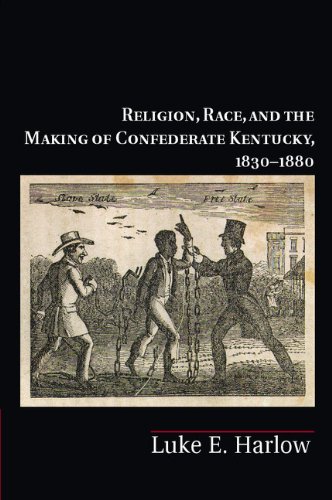
In a somewhat similar vein to the above title, Luke Harlow's Religion, Race, and the Making of Confederate Kentucky, 1830-1880, is a book that I've been wanting to read for several years now. My fondness of Kentucky history has not diminished since leaving there in 2015. I found Anne Marshall's book Creating a Confederate Kentucky to be such a compelling read. And this book appears to branch off of Marshall's and show how religion and slavery shaped the state's response to emancipation and its post-war alignment with Lost Cause.   


I've mentioned on here before how I am trying to find just about everything I can get my hands on related to the Battle of New Market Heights and the United States Colored Troops who fought there. Recently I became aware of The Colors of Dignity: Memoirs of Civil War Brigadier General Giles Waldo Shurtleff, edited by Catherine Durant Voorhees. Memoirs always need to approached with a degree of caution due to time lag between when the events being described happened and when they are being written about. However, memoirs can also provide invaluable insights and should be judged after reading them and not before. At the battle of New Market Heights, Shurtleff served as lieutenant colonel of the 5th United States Colored Infantry. Raised primarily in Ohio, and formerly known as the 127th Ohio, this regiment saw significant action around Petersburg and Richmond. I'm eager to read how he remembered his service and the men he fought with.


There are certain historian authors that I particularly enjoy reading. Brian Steel Wills is one of many for me. Wills has covered a diverse array of topics and personalities during his career. One of those people is someone I know little about--although he is the subject of several biographical studies. Wills' Confederate General William Dorsey Pender: The Hope of Glory will hopefully provide me with a much richer understanding of this young general's personality and his life. I've encountered Pender's voluminous wartime correspondence with his wife while reading other books, but I'm looking forward to reading those references within the context of his life story. 


I often have people comment to me about my eclectic reading within the field of Civil War-era studies. I am guilty as charged. I don't seem to have just one niche interest in Civil War studies. When I come across mentions of books like Brandi Clay Brimmer's Claiming Union Widowhood: Race, Respectability, and Poverty in the Post-Emancipation South, there is a strong sense of curiosity and something in me that wants to know about it. Reading books concerning the struggles of USCT soldiers to obtain pensions for their service after the war makes me wonder how even more difficult it must have been for their widows, who perhaps did not have the immediate connections of comrades and white officers that their soldier husbands did. I'm fascinated to learn more!


The 1863 months following the Battle of Gettysburg are traditionally the least studied in the the histories of the Army of the Potomac and the Army of Northern Virginia. However, historian Jeffrey William Hunt is currently making that period a definite focus of his research and writing. To go along with his previously published book, Meade and Lee at Bristoe Station, which appeared in 2018, now available is, Meade and Lee at Rappahannock Station: The Army of the Potomac's First Post-Gettysburg Offensive, From Kelly's Ford to the Rapidan, October 21 to November 20, 1863. This book will go a long way toward filling yet another "pot-hole" of my knowledge and will hopefully help me better understand the months leading into the Overland Campaign.  

Tuesday, April 27, 2021

Civil War Soldier Pastimes


In our modern era of high-tech devices and rapid transit, many citizens are now seeking ways to pass the time while also attempting to mitigate the effects of the present pandemic. Some people are using their personal computers for school work and to reconnect with old friends, while others are discovering new low-tech hobbies now that imposed contact limits and travel restrictions require making significant adjustments to previously normal routines.

Civil War soldiers had their challenges with “down time,” too. When we think about the Civil War, we tend to focus our thoughts on the bloody battles fought from 1861-1865. However, the conflict’s battles, skirmishes, and engagements made up only a small proportion of a soldier’s experience. The fighting men (and some women) spent much more time in moving from place to place and in their encampments. And, while soldiers certainly had both military and personal responsibilities to preform while in those situations, they still looked to fight boredom and monotony in many different ways.

A favorite diversion among soldiers was various games. Games helped some soldiers take their mind off of the constant threats to their health, and the burden of worrying about those back at home, at least for a little while.

Soldiers preferred games that were easy to carry, like dominos, cards, and dice. Games that could be fashioned from readily accessible materials were also favored. For example, it did not take much time or effort to craft a set of checkers and draw a checkerboard on the back side of a rubber blanket or canvas shelter half to have some fun.

Athletic contests and games of skill, like foot races, wrestling and boxing matches, and pitching quoits or horseshoes, brought a level of satisfaction to those who performed well, just as our sports do today. Developed before the war, baseball rose in popularity due to its spread among soldiers during the war. Like many other period games, soldiers constructed a bat and a ball from nearby materials, explained the rules, and a grand time usually followed.

Some soldiers used part of their “free time” to read, or learn to read. The range of reading materials available to fighting men ran from Bibles and religious tracts to dime novels and newspapers. Soldiers were also prolific writers. Since the mail system was the only means of communication with loved ones back on the home front, soldiers both wrote and often requested news from home.

During our present national trial, we can look to history not only for answers to the big questions on policy, but also for ideas on how to maintain a necessary healthy balance in our everyday lives. Game on!


Monday, April 26, 2021

The Black Regiment by George Henry Boker


The Black Regiment

by George Henry Boker


Dark as the clouds of even,

Ranked in the western heaven,

Waiting the breath that lifts

All the dread mass, and drifts

Tempest and falling brand

Over a ruined land; - 

So still and orderly, 

Arm to arm, knee to knee,

Waiting the great event, 

Stands the Black Regiment.


Down the long dusky line

Teeth gleam and eye ball shine;

And the bright bayonet,

Bristling and firmly set,

Flashed with a purpose grand,

Long ere the sharp command 

Of the fierce rolling drum

Told them the time had come,

Told them what work was sent

For the Black Regiment


"Now," the flag-sergeant cried,

"Though death and hell betide,"

Let the whole nation see

If we are fit to be

Free in this land; or bound

Down, like the whining hound,-

Bound with red stripes of pain

In our old chains again!"

Oh, what a shout there went

From the Black Regiment


"Charge!" Trump and drum awoke,

Onward the bondman broke;

Bayonet and sabre stroke

Vainly opposed their rush.

Though in the wild battle's crush,

With but one thought aflush,

Driving their lords like chaff,

In the guns' mouths they laugh;

Or at the slippery brands

Leaping with open hands,

Down they tear man and horse,

Down in their awful course;

Tramping with bloody heel

Over the crashing steel,

All their forward bent,

Rushed the Black Regiment.


"Freedom!"-Their battle-cry--

"Freedom! or leave to die"

Ah! And they meant the word,

Not as with us 'tis heard,

Not a mere party shout:

They gave their spirits out;

Trusted the end to God,

And on the gory sod

Rolled in triumphant blood.


Glad to strike one free blow,

Whether for weal or woe;

Glad to breath one free breath,

Though on the lips of death.

Praying--alas!, in vain--   

That they may fall again,

So they could once more see

That burst to liberty!

This was what "freedom" lent

To this Black Regiment


Hundreds and hundreds fell;

But they are resting well;

Scourges and shackles strong

Never shall do them wrong.


Oh, to the living few,

Soldiers be just and true!

Hail them as comrades tried;

Fight with them side by side;

Never, in the field or tent,

Scorn the Black Regiment.

Sunday, April 25, 2021

Negro Quarters, Army of the James


This woodcut image of winter quarters belonging to USCT soldiers in the Army of the James appeared in the February 25, 1864 issue of Harper's Weekly. It appears to offer a similar look as those in the winter camp scene photograph I examined recently. 

Saturday, April 24, 2021

The Negro on the Fence


Before African Americans were allowed to enlist in the Union army, a sentiment among whites prevailed in the free states that the service of black men was not wanted or needed. Much of that attitude came from their mistaken race-based belief that African Americans would not hold up under the rigors of soldier life and that they did not have the courage for combat situations.

However, others did not understand why the United States government did not take advantage of this additional reserve of manpower much sooner than they did. One of these folks probably wrote "The Negro on the Fence." I came across this parable in the very well researched and written book, Embattled Freedom: Chronicle of a Fugitive-Slave Haven in the Wary North by Jim Remsen. He credits it to the Pittston (PA) Gazette and published in April 1863. 

The Negro on the Fence


Harken to what I now relate,

And on the moral meditate.


A wagoner with grist for mill,

Was stalled at bottom of a hill;

A brawny negro passed that way,

So stout he might a lion slay.


“I’ll put my shoulder to the wheels

It you’ll bestir your horse’s heels!”

So said the African, and made

As if to render timely aid.


“No,” cried the wagoner, “stand back!

I’ll take no help from one that’s black!”

And to the negro’s great surprise

Flourished his whip before his eyes.


Our “darkey” quick “skedaddled” thence,

And sat upon a wayside fence.


Then went the wagoner to work,

And lashed his horsed to a jerk;

But all his efforts were in vain

With shout, and oath, and whip, and rein.


The wheels budged not a single inch,

And tighter grew the wagoner’s pinch.


Directly there came by a child,

With toiling step and vision wild;

“Father,” said she with hunger dread,

“We famish for the want of bread.”


Then spoke the negro: “If you will,

I’ll help your horses to the mill.”


The wagoner in grievous plight,

Now swore and raved with all his might,

Because the negro was not white;

And plainly ordered him to go

To a certain place that’s down below.


Then rushing came the wagoner’s wife,

To save her own and infant’s life,

By robbers was their homestead sacked,

And smoke and blood their pillage tracked.


Here stops our tale. When last observed,

The wagoner was still “conserved”

In mud at bottom of the hill,

But bent on getting to the mill.


And hard by, not a rod from thence,

The negro sat upon the fence.

Sunday, April 18, 2021

A Man Knows a Man


 Courtesy of Harper's Weekly, April 22, 1865